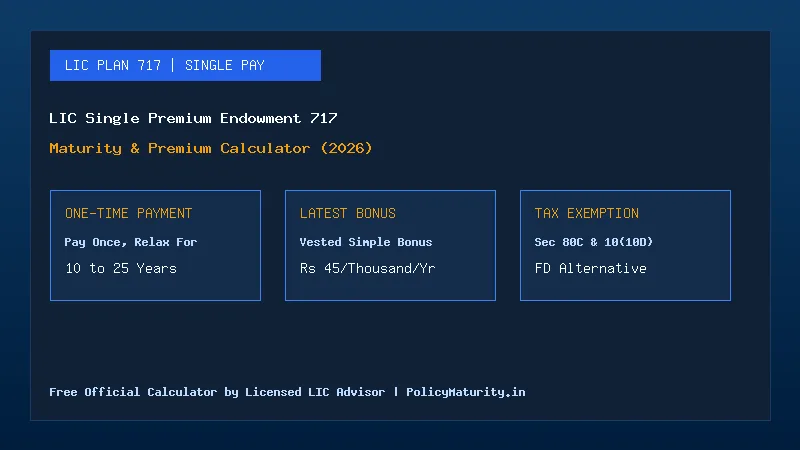
Single Premium Endowment removes the need to remember a premium every year. You pay once at the start, but the money is still meant for the chosen policy period. Before using savings for that payment, think about how much you may need for other expenses while the policy continues.
One payment still needs a long-term plan
This plan allows entry from thirty days to sixty five years, subject to the age at maturity and the chosen term. The starting cover is one lakh rupees. A policy for a young child must meet the maturity age rule, so the shortest term is not available to every child.
Check cover separately from the deposit
The one-time premium buys the cover shown in your policy paper, and eligible bonus money may be paid with maturity. It is not a bank deposit with a fixed interest rate. For a different single-payment plan that uses market funds, check the Nivesh Plus policy calculator and compare the risks as well.
Five lakh cover does not mean five lakh premium
If your basic cover is five lakh rupees, that is the base maturity amount when you survive to the end under the policy terms. It does not tell you the one-time premium. Your age and chosen years affect that price, while any eligible bonus is a separate addition to maturity.
FAQ
Q: Will LIC ask for another base premium next year?
A: No. The base plan uses one premium at the start. Keep the receipt and check any separately chosen extra cover terms on your policy paper.
Q: Must I wait one full year for a loan on this version?
A: The current brochure allows it after three months from issue or the free-look period, whichever ends later. Your own contract and loan conditions apply.
Q: Is maturity automatically tax free because I pay only once?
A: No. The premium-to-cover ratio and other applicable tax conditions matter. A one-time payment alone does not establish tax exemption for the maturity money.