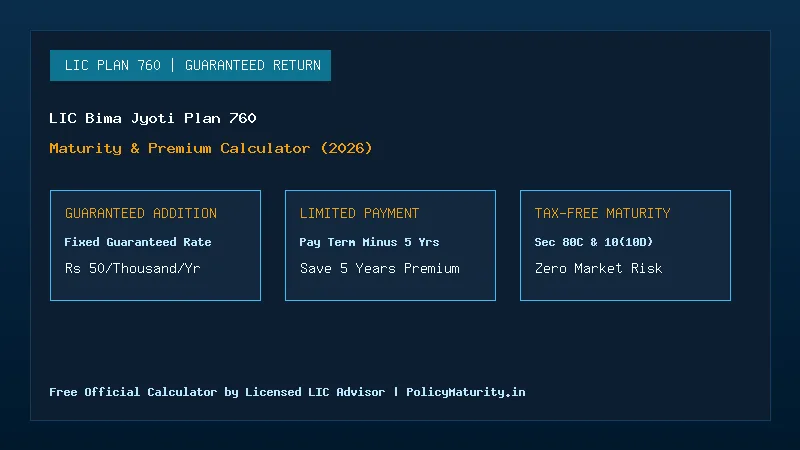
Bima Jyoti and New Bima Jyoti are not the same contract. If you hold the older policy, use its own plan number and rules when checking the result. This page explains that older version, which LIC lists as withdrawn, so the example should not be used as a new purchase quote.
First check which Bima Jyoti you hold
The older version allowed entry from thirty days of age, with term and maturity age limits that still had to be met. Starting basic cover was one lakh twenty five thousand rupees. For a child’s policy, the earliest joining age does not mean every policy term was available from birth.
Fixed additions and shorter paying years
For each eligible policy year, a fixed amount gets added based on basic cover, while premiums stop five years before the term ends. Those additions stay with the policy rather than arriving as yearly spending money. You can compare the older Bima Ratna policy calculator to see how scheduled money-back payments differ.
Ten lakh maturity in a twenty year example
On five lakh rupees of cover, fifty rupees per thousand gives twenty five thousand rupees of fixed addition each year. Over twenty years, the additions total five lakh rupees and base maturity adds another five lakh. This ten lakh example assumes all required premiums are paid and the policy runs to maturity.
FAQ
Q: Can LIC change the fixed fifty rupees addition because yearly bonus falls?
A: This version’s addition is written into the contract, rather than being a declared annual bonus. It applies while the policy meets the required conditions.
Q: For an eighteen year Bima Jyoti term, when do premiums finish?
A: The scheduled paying period is thirteen years. The remaining five years complete the policy term after the required base premiums have been paid.
Q: Can every thirty day old child take the shortest term?
A: No. The policy must also reach the required maturity age. The child’s age and selected term need to be checked together.