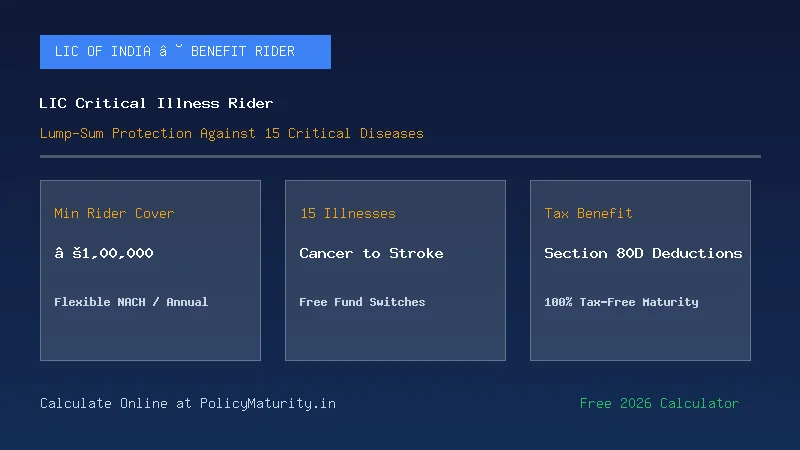
New Critical Illness Benefit Rider pays for a covered condition meeting its written definition, rather than for every serious health problem. This page concerns an older withdrawn version, so existing holders should compare the policy number and wording carefully before using information about a newer LIC health rider with a different benefit list.
Use the illness definition from the right version
The rider lists fifteen conditions, but the required severity and evidence are part of each definition, not optional details below the illness name. A diagnosis alone may therefore be insufficient for a claim, and the waiting and survival periods also need to be satisfied under the issued contract.
Diagnosis and claim eligibility are not identical
The illness payment is a separate kind of support from life cover that pays on death, and the two should not be confused when checking family protection. The Term Assurance Rider explains the latter purpose; it does not replace this rider's illness definitions or claim conditions.
A fixed illness benefit is not a hospital bill refund
With five lakh rupees critical illness cover, an accepted claim pays that fixed benefit even though the actual treatment bill may be a different amount. After that payment the rider ends, so another later illness does not create a second five lakh claim under the same rider; the main policy has its own continuing terms.
FAQ
Q: Does this older Critical Illness Rider cover every cancer diagnosis?
A: No. The listed cancer condition has a specified severity definition and exclusions. The illness name alone is not enough; LIC assesses the medical evidence against that wording.
Q: What happens if death occurs within the rider's survival period?
A: This version requires survival for thirty days after diagnosis. If death occurs within that period, the illness rider benefit is not payable under the stated rule.
Q: Is there a fresh illness waiting period after this rider is revived?
A: The ninety day waiting rule runs from risk commencement or revival, whichever is later, with the stated accident exception. Check the exact dates in the claim records.