Jeevan Umang has two dates worth checking before you look at the final amount. One is when the yearly income starts, and the other is the maturity date at age one hundred. If you need money for daily expenses sooner, the waiting time before the first payment matters just as much.
Age matters when choosing the paying years
The revised plan allows entry from thirty days of age, but the paying years must fit the age rules. A child cannot receive the first yearly income before the allowed age. For an existing policy, check the joining age and premium term on the policy paper rather than using your age today.
When the yearly money starts
When all due premiums have been paid, the first yearly payment comes at the end of the premium paying term. Later payments depend on survival and continue until the anniversary before maturity. You can compare the Jeevan Utsav policy calculator if you want to understand a different income start schedule.
Forty thousand rupees a year on five lakh cover
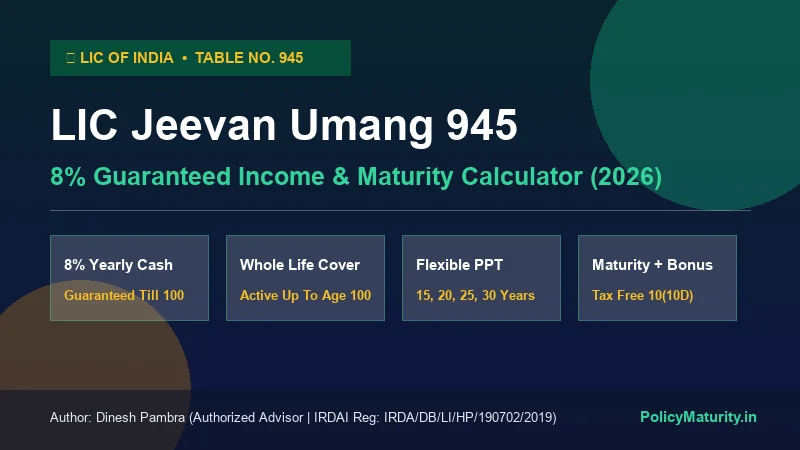
On five lakh rupees of basic cover, eight percent gives forty thousand rupees each year. This amount is based on your cover, not the total premiums you have paid. The bonus money shown for maturity is a separate part, and future bonus rates should not be treated as fixed income.
FAQ
Q: Does Umang income start one full year after premiums finish?
A: The first payment falls at the end of the premium paying term, provided all due premiums are paid and the survival conditions are met.
Q: Is every yearly Umang payment automatically tax free?
A: No. Tax treatment depends on the applicable law and your policy details. The calculator does not establish whether your payment qualifies for exemption.
Q: Will a reduced-cover Umang policy always pay yearly income?
A: No. The reduced maturity cover must meet the policy threshold of two lakh rupees for reduced survival benefits. Ask LIC to confirm your reduced benefit.