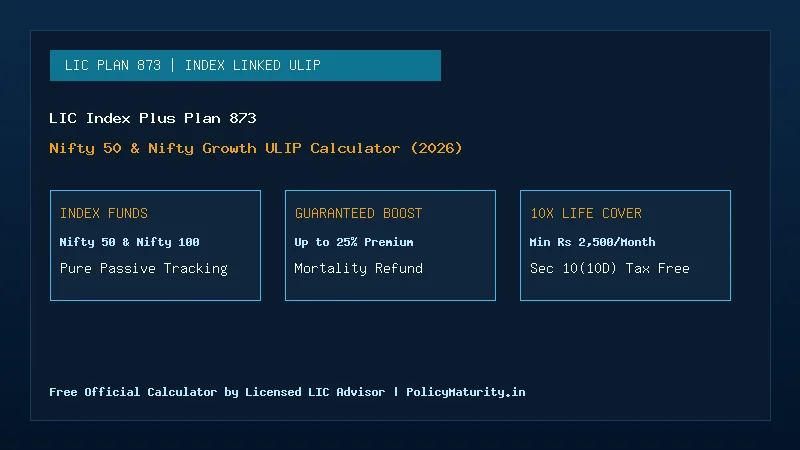
Index Plus can sound like a simple index fund, but it is a life insurance policy with market funds, cover charges and its own withdrawal rules. The fund names describe the shares from which investments are selected; they do not promise that your policy value will rise by exactly the same amount as an index.
The fund name does not promise an index return
The two available funds both carry very high investment risk, so a larger possible growth figure must be read with the chance of a fall in value. Before choosing, check the share investment range and how the charges fit your planned premium, rather than assuming a familiar index name removes risk.
Choose the investment mandate with care
One fund selects shares from the wider Nifty hundred group and the other from the Nifty fifty group, within their stated investment rules. You can compare SIIP for a different range of fund choices, but each policy needs its own charge and benefit comparison.
Compare the money invested with the policy value
If you pay one lakh rupees a year for ten years, the total premium is ten lakh rupees before any separate extras. That does not fix the final fund at ten lakh or at a promised higher amount: market movement, the timing of payments, charges and eligible additions all affect the eventual policy value.
FAQ
Q: Does Index Plus copy every share in Nifty in the same weight?
A: The brochure describes selected stocks from the stated index groups, not a promise of exact passive replication. Do not assume identical returns or holdings merely from the name.
Q: Are Index Plus additions protection against every market loss?
A: No. Contractual additions do not remove investment risk from the underlying funds. The overall value can still be affected by poor markets and policy charges.
Q: Does the Index Plus lock-in end all withdrawal restrictions?
A: No. After the first five years, partial withdrawals still follow policy conditions and limits. Check those rules before planning to use the fund for a fixed expense.